
Company Stores Didn’t Remove the Work. They Moved It.
Share
Online company stores solved a real problem.
Instead of asking one employee, coach, broker, or volunteer to collect names, sizes, orders, and payments manually, a group could send everyone to one website. Purchasers could choose their own products, enter their own information, and pay when the order was placed.
That was meaningful progress.
But for many brokers, printers, and decorators, the work did not disappear. It simply moved downstream.
Most company stores give you orders to fulfill. Ours fulfills them for you.
The Storefront Was Only the First Step
A conventional online store can organize the customer-facing transaction. It can display approved products, collect sizes, accept payments, and provide an order report.
Then someone still has to turn that report into finished products.
Depending on the program, that may require the broker, printer, or decorator to:
- Export and reconcile customer orders
- Break sales into products, colors, and sizes
- Create purchase orders and source apparel
- Re-enter information into a production system
- Coordinate artwork, proofs, transfers, and decoration
- Separate finished products by purchaser
- Create packing slips and shipping labels
- Ship individual orders or organize bulk distribution
- Reconcile sales, costs, earnings, and payouts
The store made ordering easier for the customer. It often created an entirely new operating responsibility for the company offering it.
The Problem Was Moved, Not Resolved
This explains why many brokers and small print shops recognize the value of company stores but still hesitate to sell them.
The sales opportunity is attractive. A company, school, team, club, or organization gets one approved place to purchase apparel. The broker strengthens the customer relationship and may create recurring revenue.
But each additional order can also create more operational work: more apparel purchasing, more production coordination, more individual packages, and more reconciliation.
At some point, the person selling the opportunity becomes the person maintaining the system behind it.
This is the same operational pressure that causes apparel production to break at scale . The storefront may collect the order, but the surrounding production and fulfillment system still has to process it reliably.
A truly managed company store should do more than organize orders. It should connect those orders to the people and systems responsible for producing and delivering the finished products.
What Fully Managed Should Mean
My Shirt Shop was designed around the work that begins after the customer clicks Buy.
The storefront is connected directly to our product setup, production, purchaser-level packing, fulfillment, reporting, and payout processes. Instead of sending a spreadsheet back for the next round of work, the order continues through the operating system behind the store.
That means:
- Approved products and artwork are configured before launch.
- Customers place and pay for their own orders online.
- Order information enters the appropriate production workflow.
- Apparel is sourced or drawn from prescribed inventory according to the store model.
- Products are decorated, quality checked, and packed by purchaser.
- Orders are prepared for coordinator pickup or shipped directly to the purchaser.
- Program activity is reported and applicable earnings are reconciled.
You remain responsible for the relationship, product approvals, pricing decisions, and promotion. My Shirt Shop handles the operational work behind each order.
Three Store Models for Three Different Needs
Not every organization needs the same kind of store. The correct model depends on the selling window, apparel source, production timing, and fulfillment method.
Campaign Stores
A Campaign Store runs for a defined selling period. It is a strong fit for schools, teams, clubs, events, fundraisers, and limited apparel programs.
Customers order and pay during the campaign. After the store closes, final quantities are consolidated and produced as one coordinated batch. Purchaser orders are packed separately and prepared for coordinator pickup or configured direct shipping.
Learn how Campaign Stores work
Managed POD Stores
A Managed POD Store remains continuously available. My Shirt Shop sources the approved apparel and produces each order as it arrives.
Completed orders are shipped directly to the purchaser. The store owner receives ongoing reporting and applicable monthly payout without managing apparel inventory, production, or individual fulfillment.
Learn how Managed POD Stores work
Broker POD Stores
A Broker POD Store is a continuously available, white-label program using blank apparel supplied and owned by the broker.
Available quantities reflect the prescribed inventory physically in stock. As customers order, My Shirt Shop decorates those blanks, updates availability, and white-label ships the completed products to the broker’s customer.
Learn how Broker POD Stores work
Why Production Integration Changes the Economics
Production methods that require significant job-specific setup can make small or unpredictable orders difficult to produce efficiently. Screens, setup costs, predecorated inventory, and uncertain size demand can force someone to estimate quantities before customers have ordered.
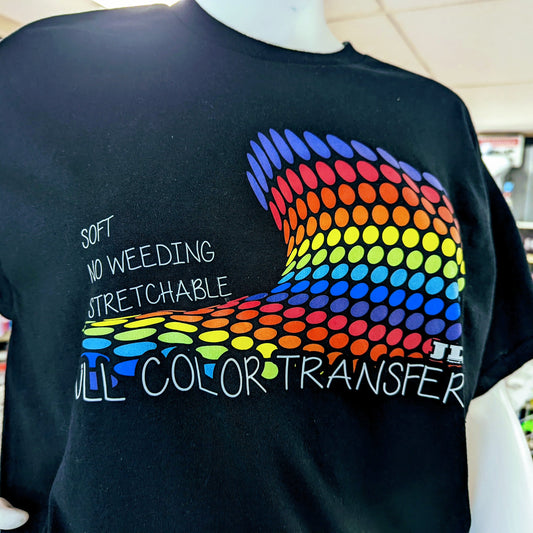
Our transfer-based production model allows approved products to remain blank until an actual order exists. We decorate what was purchased rather than producing finished inventory in anticipation of demand.
This helps reduce:
- Over-ordering
- Leftover decorated garments
- Missing or excess sizes
- Inventory risk at the end of a program
- The pressure to predict exactly what customers will buy
More importantly, it allows the storefront and production system to behave like one connected operation instead of two separate systems joined by spreadsheets and manual re-entry.
The Opportunity Without the Operational Burden
Company stores can support employee programs, schools, athletics, events, fundraisers, client merchandise, and recurring apparel needs.
The opportunity was never the problem.
The problem was that selling the store often meant inheriting everything required to operate it.
You manage the relationship. We manage every order.
If you have a school campaign, employee store, client program, or event opportunity sitting on the sidelines because fulfillment is too much work, start with one store.
Send us what you currently have—even if the products, artwork, pricing, or fulfillment plan are not fully decided. We will help identify the appropriate model and organize the path to launch.
Start Your First Store